
Skip to content
QSAT Academy
Grades 3–5

Astro Kids

Bringing space science to classrooms

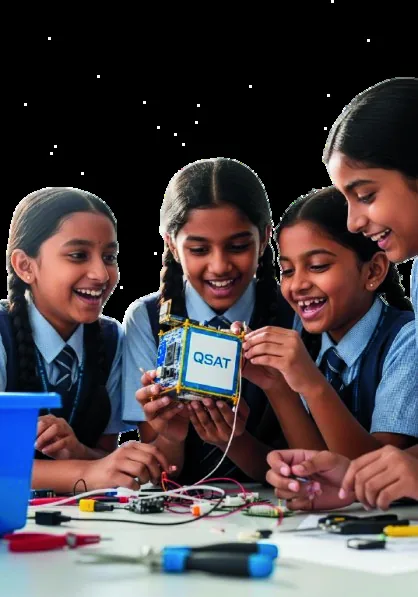
AstroKids is a hands-on space science program created for students in Grades 3 to 5. Instead of just reading about space in textbooks, students dive into it through storytelling, fun experiments, and creative building projects.
Book a Free Demo13 hands-on kits · 2 levels
Students taking part in the Astro Kids program

Program levels

How students progress

  • 1

    Astro Seekers

    Discovery — exploring planets, light and space objects through simple, engaging experiments.

    6 kits

  • 2

    Astro Makers

    Building — designing, testing and launching real models inspired by space technology.

    7 kits

  • A fun introduction to space science for Grades 3–5.
  • Builds curiosity, observation skills, and an understanding of light, motion, and planetary cycles.
  • Develops problem-solving, creativity, teamwork, and model-building skills inspired by real-world space technology.

The kits

13 things your students will build

Every kit ships with the materials, the guided session, and the learning outcomes it maps to.

Showing 13 of 13 kits.

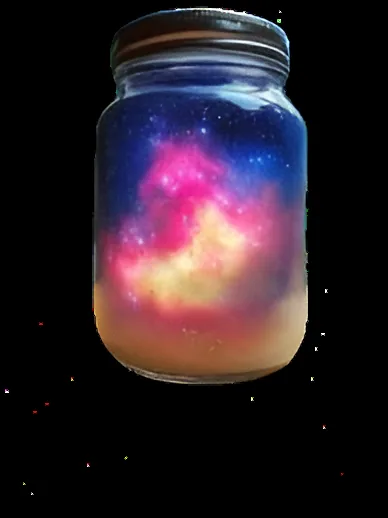
  • The Galaxy in Jar kit

    Galaxy in Jar

    Create a mini galaxy in a jar to learn about stars, nebulae, and cosmic dust.
    • Grasp the basics of galaxies and star formation.
    • Encourage imagination with a creative model.
    • Build curiosity about space.
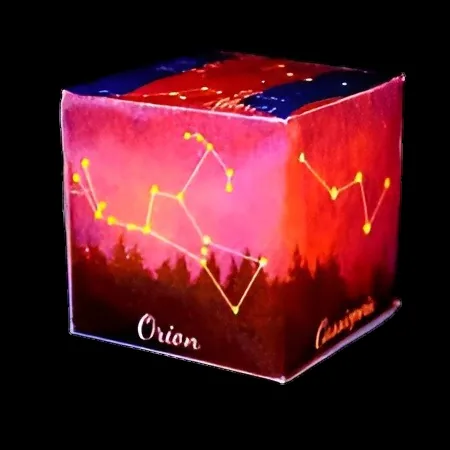
  • The Constellation Cube kit

    Constellation Cube

    Build a cube projector to map constellations and explore star patterns in the night sky.
    • Understand how constellations are formed.
    • Learn basic celestial navigation.
    • Improve observation and spatial skills.
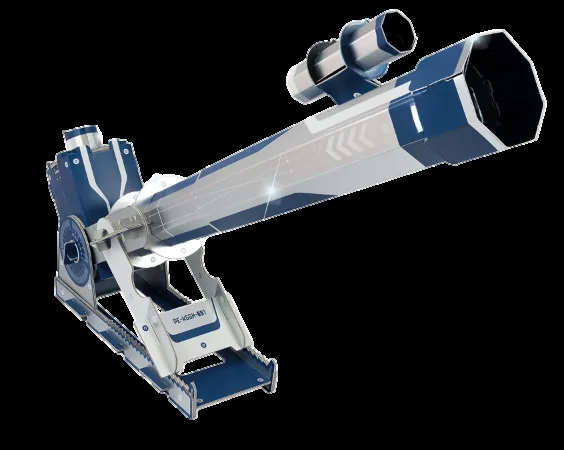
  • The First Scope kit

    First Scope

    Assemble a simple telescope to explore how light travels and magnifies distant objects.
    • Understand basic optics and magnification.
    • Learn how telescopes help us study space.
    • Strengthen observation and inquiry skills.
  • The Sun Tracker kit

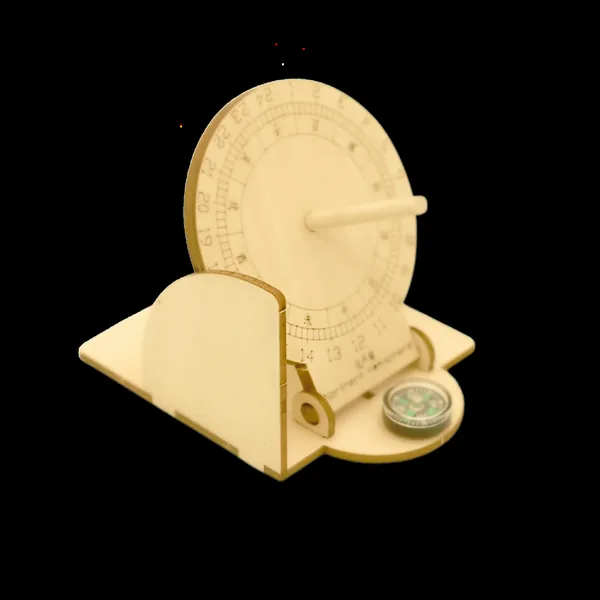
    Sun Tracker

    Build a simple tracker to study the Sun's movement and shadow patterns.
    • Understand Earth's rotation and revolution.
    • Learn how shadows change with the Sun.
    • Develop observation and recording skills.
  • The Moon Phase Box kit

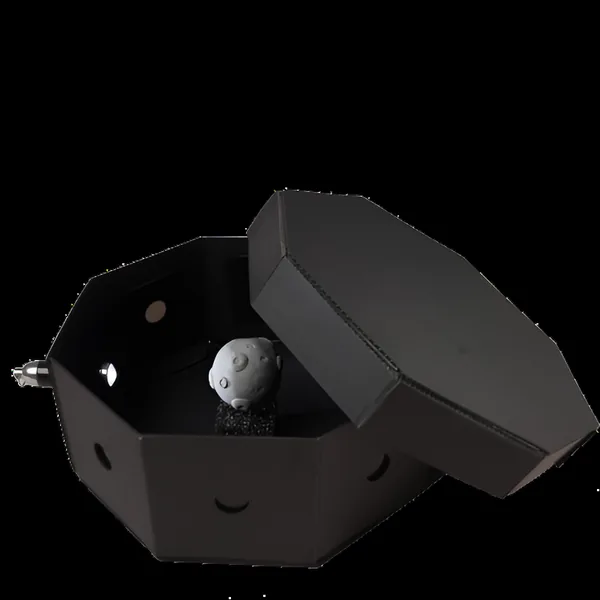
    Moon Phase Box

    Create a model to observe how the Moon changes shape during its phases.
    • Understand lunar cycles and moonlight reflection.
    • Learn why the Moon looks different each night.
    • Build curiosity through hands-on exploration.
  • The Paper Launcher kit

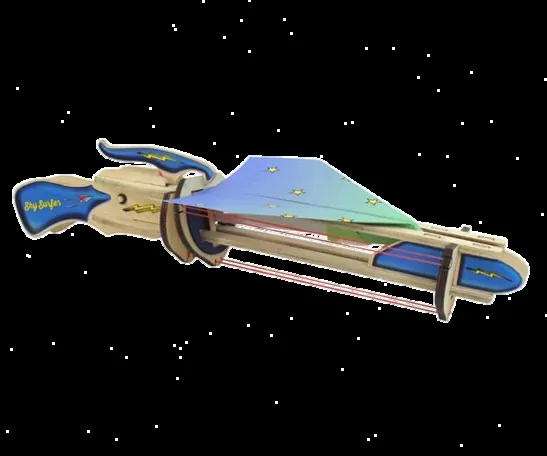
    Paper Launcher

    Design and launch paper rockets to explore force and motion.
    • Understand the basics of propulsion and aerodynamics.
    • Learn how air pressure creates movement.
    • Encourage creativity and experimentation.
  • The Rocket Display kit

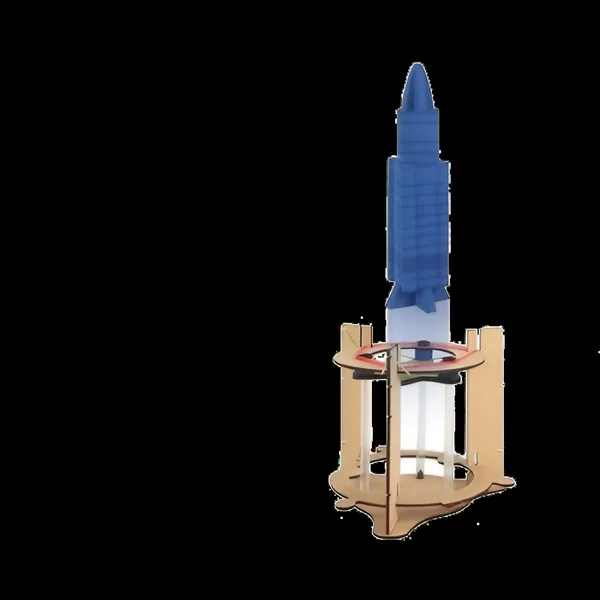
    Rocket Display

    Build a model rocket to learn about design, stability, and propulsion.
    • Understand rocket structure and parts.
    • Learn the basics of aerodynamics and balance.
    • Spark interest in space engineering.
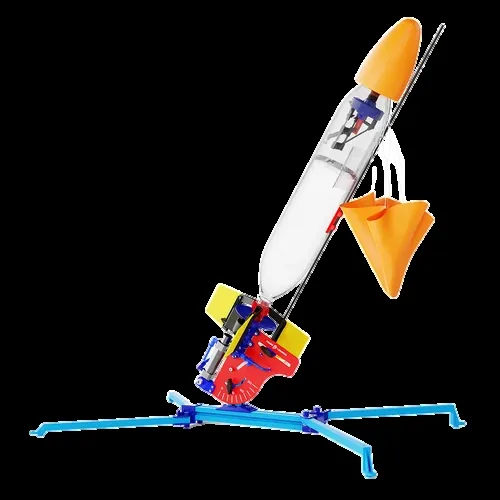
  • The Water Rocket kit

    Water Rocket

    Launch a water-powered rocket to explore pressure, force, and motion.
    • Understand how pressure creates thrust.
    • Learn the basic physics of flight and trajectory.
    • Build problem-solving and teamwork skills.
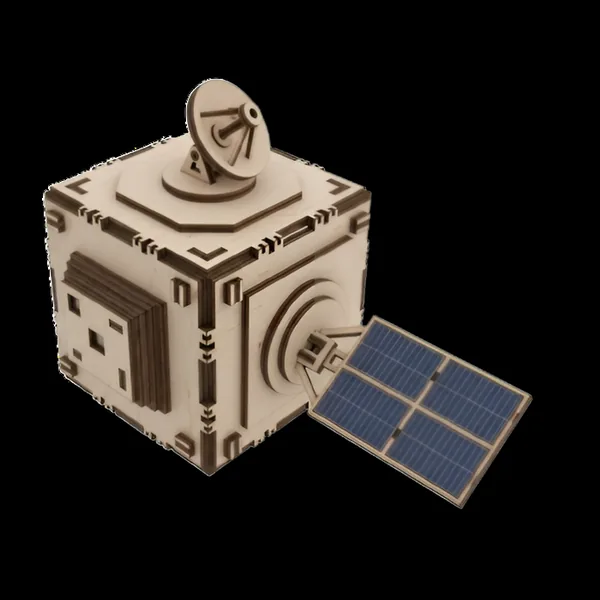
  • The Satellite Builder kit

    Satellite Builder

    Assemble a mini satellite model to understand how satellites work in space.
    • Learn about satellite parts and functions.
    • Understand how satellites communicate.
    • Gain early exposure to space technology.
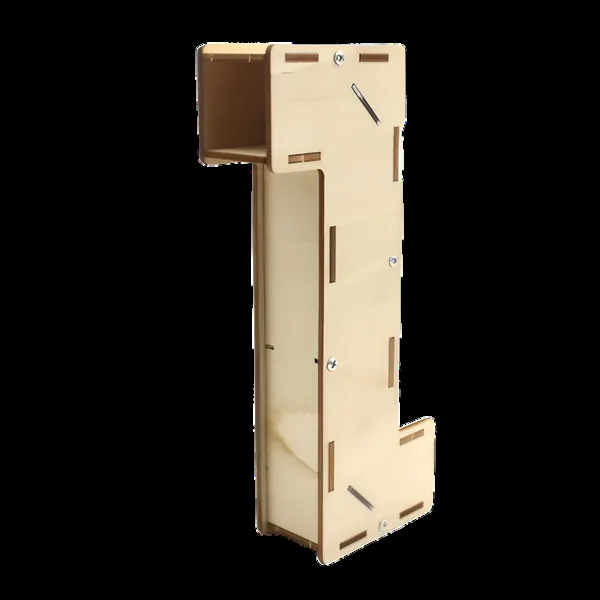
  • The Periscope Build kit

    Periscope Build

    Construct a simple periscope to explore how light reflects and travels.
    • Understand reflection and basic optics.
    • Learn practical uses of periscopes.
    • Strengthen curiosity through hands-on building.
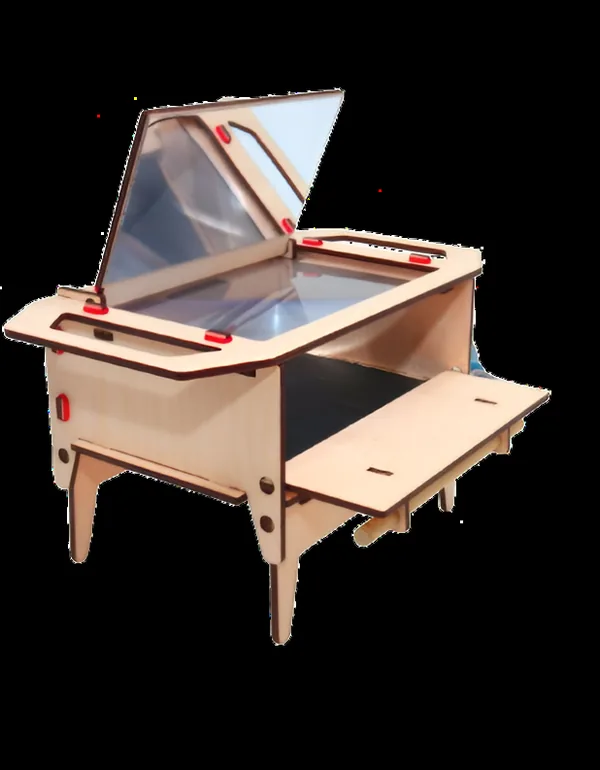
  • The Solar Oven kit

    Solar Oven

    Build a simple oven powered by sunlight to explore solar energy.
    • Understand heat transfer and renewable energy.
    • Learn how sunlight can be used for cooking.
    • Build awareness of sustainable technologies.
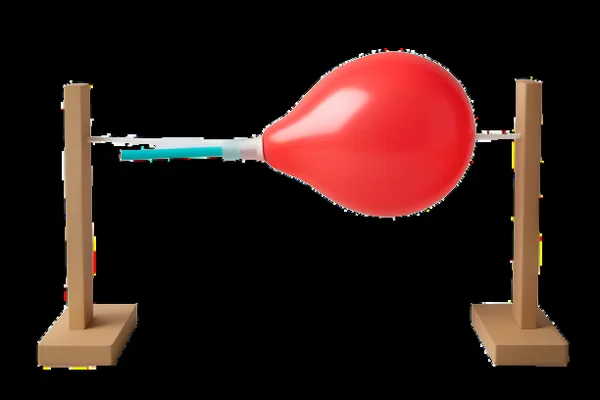
  • The Balloon Dash kit

    Balloon Dash

    Create balloon-powered vehicles to explore motion and propulsion.
    • Understand air pressure and thrust.
    • Learn how friction affects movement.
    • Encourage creativity and problem-solving.
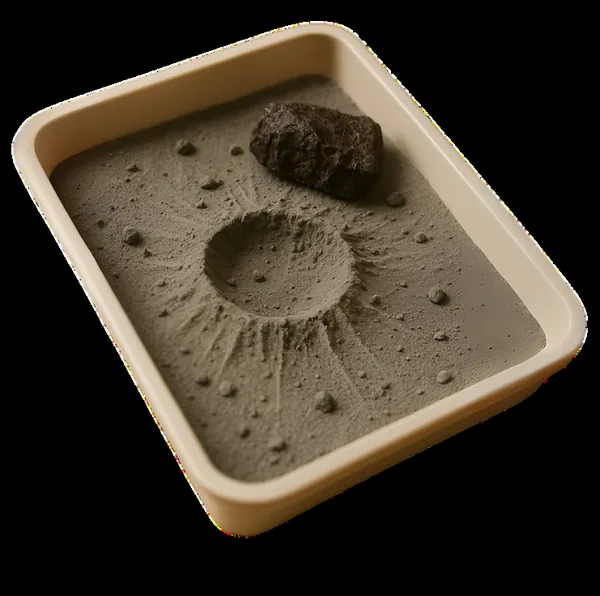
  • The Cosmic Crater kit

    Cosmic Crater

    Simulate asteroid impacts to study how craters form on planetary surfaces.

    • Understand impact force and crater patterns.
    • Learn how asteroids shape planets and moons.
    • Build curiosity about planetary science.

What students take away

  • Understand motion, light, air and pressure.
  • Build problem-solving and creative thinking.
  • Collaborate in teams with real tools.
  • Gain early exposure to space tech and design.

Across the Astroverse curriculum

  • Understand core space and physics concepts.
  • Build 10+ functional STEM models.
  • Record experiments in age-appropriate formats.
  • Present ideas with confidence.
  • Connect ancient and modern Indian space history.

For schools

Why schools run this program

  • Real STEM skills, not just theory.
  • Fully guided, with minimal teacher load.
  • Affordable and scalable for all school types.
  • Space plus storytelling makes learning unforgettable.
  • Builds confidence, curiosity, and innovation.

Let's Build the Future Together

Every great innovation begins with curiosity. Every future leader begins with an opportunity. Together, let's inspire the next generation of innovators, creators, and changemakers.

Let's inspire the next Kalpana Chawla or APJ Abdul Kalam. It starts here.

Supported by passionate engineers, educators, and dreamers ❤

Book a free demo

Tell us about your school and we'll arrange a curriculum walkthrough.

Grades you're interested in

Prefer email? academy@qsat.diy · Or call +91 94870 65364